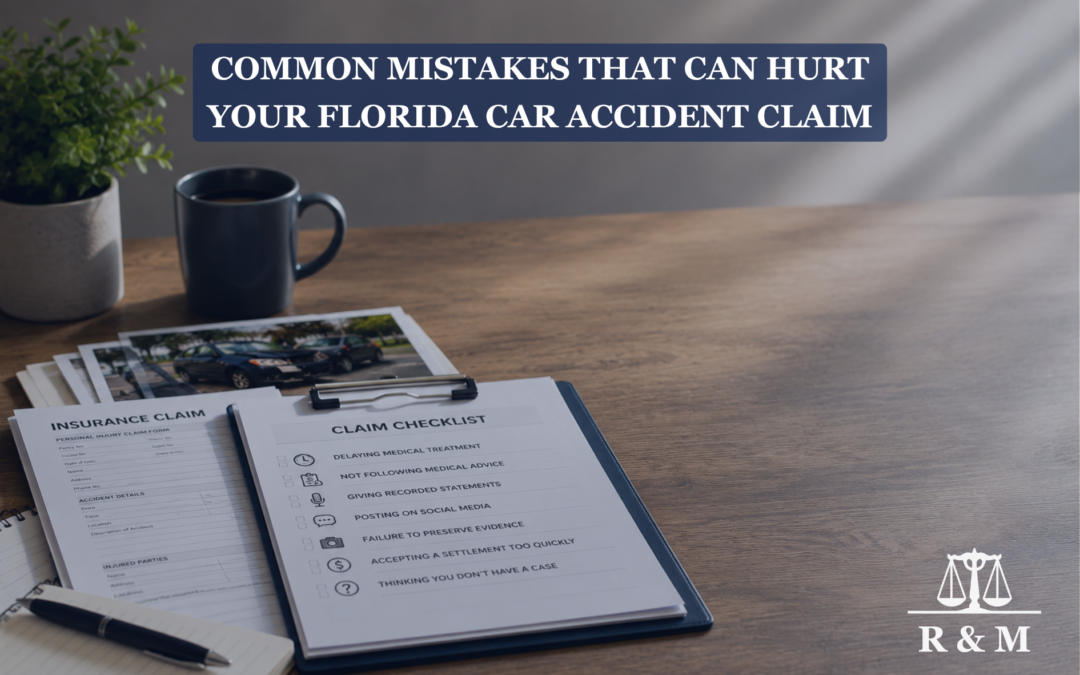
After a car accident, most people focus on recovering from their injuries and getting their lives back on track. Unfortunately, even well-intentioned decisions made in the days and weeks following an accident can negatively impact a personal injury claim. Understanding these Florida car accident claim mistakes can help protect your rights and strengthen your claim.
⸻
Delaying Medical Treatment
One of the most common mistakes accident victims make is waiting too long to seek medical care.
Some injuries do not cause immediate symptoms. However, delaying treatment can create two significant problems:
- Your injuries may worsen without proper care.
- Insurance companies may argue that your injuries were unrelated to the accident.
In Florida, seeking treatment within 14 days of a car accident is also required to qualify for Personal Injury Protection (PIP) benefits.
⸻
Common Florida Car Accident Claim Mistakes After Medical Treatment
Seeking treatment is important, but following through with treatment is equally important.
Missing appointments, discontinuing treatment prematurely, or ignoring medical recommendations can raise red flags to an adjuster evaluating your claim.
Insurance companies often use these to argue that:
- Your injuries were not serious.
- You recovered more quickly than claimed.
- Your damages should be reduced.
⸻
Giving Recorded Statements Without Understanding the Consequences
Insurance adjusters often contact accident victims shortly after a collision.
While they may seem helpful, recorded statements can become part of the claims process and may later be used to challenge your injuries or your version of events.
Before providing a detailed recorded statement, it may be beneficial to understand your rights and consult with an experienced attorney.
⸻
Posting About the Accident on Social Media
Many people do not realize that social media activity can become relevant during a personal injury claim.
Photos, videos, comments, and status updates can sometimes be taken out of context and used to challenge injury claims.
Even seemingly harmless posts can create unnecessary complications.
As a general rule, it is wise to be cautious about discussing an accident or your recovery on social media. We recommend staying off social media entirely during the duration of your claim.
⸻
Failing to Preserve Evidence
Evidence often disappears quickly after an accident.
Important evidence may include:
- Surveillance and/or dash cam footage
- Photos of vehicle damage
- Accident scene photographs
- Witness information
- Medical records
- Repair estimates
The sooner evidence is gathered and organized, the easier it is to support a claim.
⸻
Accepting a Settlement Too Quickly
After an accident, an early settlement offer may seem appealing, especially when medical bills and other expenses begin to accumulate.
However, accepting a settlement before the full extent of your injuries is known can have long-term consequences.
Once a settlement is accepted, additional compensation is generally unavailable.
Carefully evaluating any offer before agreeing to it is often an important step in protecting your interests.
⸻
Assuming You Do Not Have a Case
Many people incorrectly believe they cannot pursue compensation because:
- They were partially at fault
- Their vehicle damage appears minor
- They initially felt fine after the accident
Every case is unique, and such assumptions made early in the process can sometimes prevent people from understanding their legal options.
⸻
Protecting Your Claim Starts Early
The actions you take after a car accident can influence your ability to recover fair compensation and avoid common Florida car accident claim mistakes that may affect your case.
Seeking timely medical care, preserving evidence, following treatment recommendations, and understanding your options can help you avoid mistakes that may weaken an otherwise valid claim.
For more information about car accident claims, explore the Rosenblum & Mayer blog or contact our office to discuss your situation.