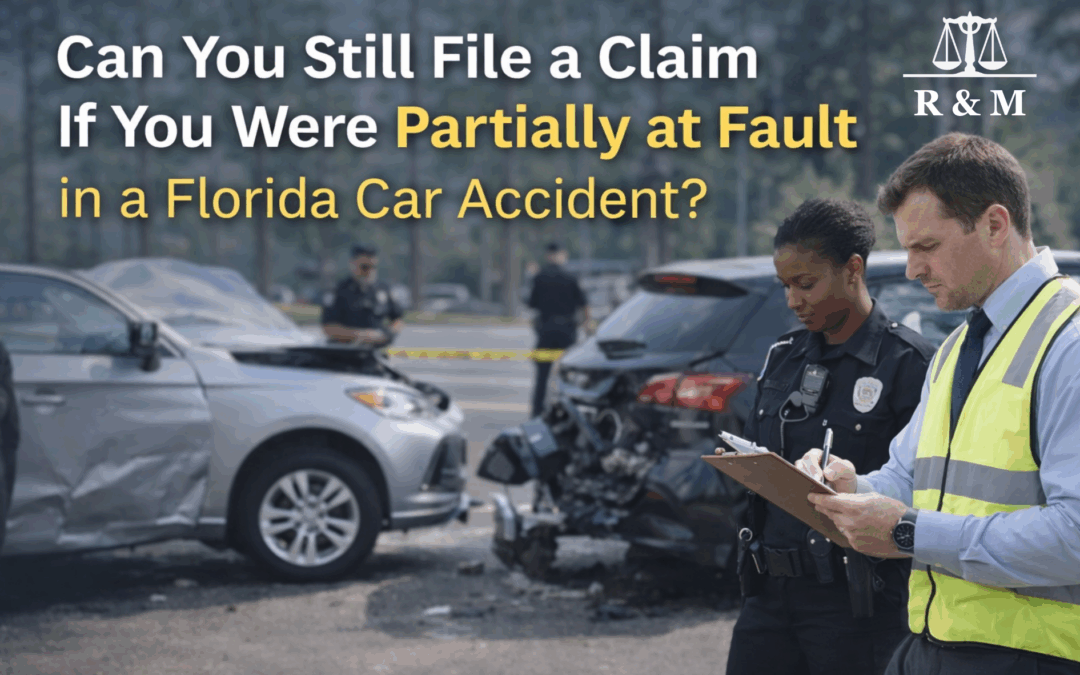
Many people assume that if they were even partially responsible for a car accident, they automatically lose the right to seek compensation. This belief prevents countless injured individuals from pursuing claims they may legally be entitled to recover. If you were involved in a partially at fault Florida accident, you may still have legal options depending on how fault is determined.
In Florida, being partially at fault does not automatically prevent you from filing a personal injury claim. However, the amount of fault assigned to you does matter. Understanding how Florida’s fault laws work can make a significant difference in what options are available after an accident.
How Fault Is Determined After a Car Accident in Florida
Fault in a car accident is not determined by a single factor. Insurance companies, attorneys, and courts evaluate multiple pieces of evidence, including:
-
Police crash reports
-
Statements from drivers and witnesses
-
Photographs and video footage
-
Vehicle damage and accident reconstruction
-
Traffic laws and roadway conditions
In many cases, fault is shared between more than one party.
How Fault Is Evaluated in a Partially at Fault Florida Accident
Florida follows a modified comparative negligence system. Under this rule, fault can be shared between multiple parties, and compensation is adjusted based on each party’s percentage of responsibility.
You may pursue a personal injury claim as long as you are not found to be more than 50% at fault for the accident.
If you are found to be:
-
50% or less at fault: you may still seek compensation, though your recovery may be reduced by your percentage of fault
-
More than 50% at fault: you may be barred from recovering damages
Fault percentages are often disputed and negotiated, particularly in cases where liability is not clear.
Common Situations Where Fault Is Shared
Shared fault is more common than many people realize. Examples include:
-
Rear-end accidents involving sudden stops
-
Left-turn accidents where both drivers may have contributed
-
Accidents involving speeding and distracted driving
-
Multi-vehicle collisions
Insurance companies frequently attempt to assign a higher percentage of fault to injured drivers to reduce or eliminate payouts.
Why Admitting Fault Can Hurt Your Claim
After an accident, drivers often apologize or make statements out of stress or confusion. Unfortunately, these statements can later be used to assign fault.
It is important to understand that:
-
Casual statements may be taken out of context
-
Insurance adjusters look for ways to minimize liability
-
Fault determinations are legal conclusions, not personal opinions
This is one reason many accident victims benefit from legal guidance before giving detailed statements.
How Partial Fault Affects Insurance and Compensation
When fault is shared, insurance coverage and compensation become more complex. Factors that may impact recovery include:
-
Your assigned percentage of fault
-
Available insurance coverage
-
Whether injuries meet Florida’s serious injury threshold
-
The strength of the evidence supporting your claim
Even in shared-fault cases, compensation may still be available for medical expenses, lost wages, and pain and suffering, depending on the circumstances.
Why Legal Guidance Matters in Shared-Fault Cases
Cases involving shared fault often require careful evaluation and evidence development. Early legal guidance can help:
-
Challenge unfair fault assessments
-
Preserve evidence before it is lost
-
Communicate with insurance companies strategically
-
Prevent fault percentages from being exaggerated
Fault determinations are rarely final at the beginning of a claim and are often contested.
Do Not Assume You Do Not Have a Case
Many people walk away from valid claims simply because they believe partial fault disqualifies them. In reality, Florida law allows injured individuals to seek compensation as long as they are not more than 50% at fault.
If you were injured in a partially at fault Florida accident, understanding how fault is evaluated can make a meaningful difference in protecting your rights. Understanding how fault works and how it applies to your situation can help you make informed decisions after an accident.
For more information about Florida car accident claims and how fault may affect your case, explore the Rosenblum & Mayer blog or contact our office to discuss your situation.